

A long flight or road journey involves more than packing. If you have a history of blood clots or other risk factors, planning ahead allows time for appropriate advice. Even without a known risk, understanding the difference between ordinary travel discomfort and concerning symptoms can help you respond sensibly.
Review your own risk before departure
Long periods of limited movement during travel can increase clot risk, particularly when other risk factors are present. These may include a previous clot, recent surgery, pregnancy or some medicines and medical conditions. The CDC recommends discussing individual prevention when relevant. CDC: Blood clots and travel.
Ask early enough to organise anything recommended. Do not borrow someone else's compression garment or medicine plan because the flight duration is similar. Keep the advice with your travel documents so it is easy to follow on the day.
Make ordinary movement possible
Think about the practical details of the journey: opportunities to change position, safe breaks on the road and how you will manage hand luggage or mobility needs. Follow suitable advice for your circumstances and the safety requirements of the carrier.
If a routine requires you to remember something during a busy travel day, attach it to a reliable event. Review your plan when boarding, at a stop or before a connection. These organisational cues help you carry out advice you have already received; they do not replace an individual assessment.
Be careful with enzyme and blood-flow claims
A claim about breaking down a substance in a laboratory is not proof that an oral supplement prevents a dangerous clot in a traveller. Supplements can also interact with medicines, and “natural” does not mean free of risk. NCCIH: Using dietary supplements wisely.
Do not stop prescribed anticoagulants, add aspirin or combine products that may affect bleeding without advice. If a clinician recommends a prevention measure, ask why it is appropriate and exactly how to use it. Clarity is more useful than a collection of loosely related products.
Know when to seek help
- New swelling, pain, tenderness, warmth or redness in one leg needs prompt assessment.
- Unexplained breathlessness, chest pain, coughing blood or fainting can be emergency signs.
- Symptoms can occur after the journey as well as during it.
- Tell the clinician about recent travel and all medicines or supplements. CDC: Blood clots and travel.
A well-prepared trip includes knowing what to do if something changes. The aim is appropriate prevention and timely care, not reassurance from a capsule that has not been shown to provide it.
Complement your routine
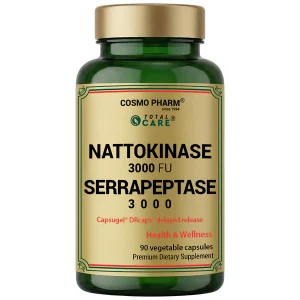
Nattokinase + Serrapeptase
Cosmo Pharm Nattokinase + Serrapeptase should not be used as a substitute for prescribed anticoagulants or as a self-directed way to prevent travel-related blood clots. Discuss the formula with a clinician before use, especially with medicines that affect bleeding or before surgery. A travel-risk plan comes first.
Explore the product Already have it? Open your Companion →Sources & further reading
- CDC: Blood clots and travel (opens in a new tab)
- NCCIH: Using dietary supplements wisely (opens in a new tab)
Written by Cosmo Pharm Editorial for general wellbeing education. This article does not diagnose a condition or replace individual medical advice. The organisations linked above do not endorse this product.