

You may think about calcium when you see a supplement shelf, but it is often easier to understand at the breakfast table. Looking at a few ordinary days of meals can reveal which foods you rely on and which assumptions deserve a label check. You do not need to redesign your entire diet in one sitting.
Find your regular sources
Calcium contributes to normal bones and teeth, as well as other body functions. Foods can provide it, and some alternatives are fortified. MedlinePlus: Calcium in diet. Begin by noting what you actually eat rather than what is theoretically in the fridge.
If you use milk, yoghurt or a fortified plant alternative, look at the calcium per serving and the amount you normally use. Different products can vary. If you avoid several food groups, a dietitian can help you identify a workable pattern instead of leaving you to guess from isolated foods.
Choose a meal anchor
An anchor is one repeated meal where a useful food fits easily. You might use yoghurt or an appropriate fortified alternative at breakfast, or choose a calcium-containing ingredient for a lunch you already make. These examples are for planning, not a fixed meal prescription.
Put the food on a recurring shopping list and decide what happens when it runs out. A backup option reduces the chance that a missed shopping trip removes the habit for the rest of the week. Build variety across several meals rather than relying on one food as your entire nutrition strategy.
Understand why vitamin D is mentioned alongside calcium
Vitamin D helps the body absorb calcium. That relationship explains why the nutrients are often paired, but it does not tell you whether you personally need a supplement or which serving is suitable. NIH Office of Dietary Supplements: Vitamin D.
If you already take a multivitamin or a vitamin D product, check the overlap. Ask about timing with medicines, including thyroid treatment or certain antibiotics. Keep the advice in writing so you can follow it without reconstructing the conversation each morning.
A simple review for this week
- Record three normal days of meals.
- Compare the labels of the milk or alternatives you actually buy.
- Choose one repeatable food anchor and one backup.
- Bring your supplement list to a pharmacist if you are considering a combination.
A useful routine should become easier with repetition. If eating is restricted by symptoms, allergies or a medical condition, individual guidance is more valuable than a generic list of high-calcium foods. The goal is adequate nourishment that fits your life.
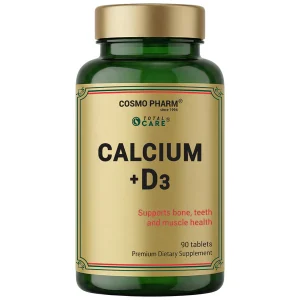
Complement your routine
Calcium + Vitamin D3
Cosmo Pharm Calcium + Vitamin D3 can complement a diet that needs additional calcium and vitamin D. These nutrients support normal bones, and vitamin D helps calcium absorption. Check whether supplementation is appropriate and how to take it around medicines. More calcium is not necessarily better, particularly if you have a history of kidney stones.
Explore the product Already have it? Open your Companion →Sources & further reading
- MedlinePlus: Calcium in diet (opens in a new tab)
- NIH Office of Dietary Supplements: Vitamin D (opens in a new tab)
Written by Cosmo Pharm Editorial for general wellbeing education. This article does not diagnose a condition or replace individual medical advice. The organisations linked above do not endorse this product.