
Bone health is easy to overlook because it rarely asks for attention during an ordinary day. A useful routine connects the things you can plan now: meals, movement and an understanding of any personal risk factors. Rather than trying to solve everything with one nutrient, make the separate pieces easier to keep together.
Understand how the pieces fit
Vitamin D helps the body absorb calcium, and vitamin K is involved in proteins important for bones and normal clotting. Choose the daily amount with your diet, health history and any other supplements in mind. NIH Office of Dietary Supplements: Vitamin D. NIH Office of Dietary Supplements: Vitamin K.
Make a short inventory of anything you take for bones, immunity or general wellbeing. The same vitamin can appear in several products. Put the amounts side by side before deciding whether an additional product fills a gap or simply duplicates one you already use.
Put movement in the calendar
Bone-friendly activity includes appropriate weight-bearing and resistance exercise. If you have osteoporosis, low bone density or physical limitations, ask which movements are safe for you. NIAMS: Exercise for bone health.
For planning purposes, choose two places in your week where movement is realistic. One may be a familiar walk; another may be a supervised strength session. The specific activities should suit your ability. Put the required equipment or shoes where you will find them, and arrange an alternative for days when heat or time changes the plan.
Review meals without turning them into a spreadsheet
Think about what you regularly eat and which foods you tend to leave out. If you avoid dairy, identify suitable alternatives and read fortification labels instead of assuming every plant drink has the same nutrients. A dietitian can help if your intake is limited or you have several restrictions.
Choose one meal to improve first. Breakfast is often a useful starting point because it repeats; dinner may work better if you eat breakfast away from home. The point is to connect the idea of bone care to an existing habit.
This week's bone-care check-in
- List the nutrients in your current supplements.
- Plan appropriate movement around your actual week.
- Check a food label you have been assuming is fortified.
- Ask whether your personal risk factors warrant further assessment.
A fracture after a minor fall, loss of height or a known risk factor deserves a medical conversation. Nutrition can support normal function, while diagnosis and treatment require their own plan. You can care about both at the same time.
Complement your routine
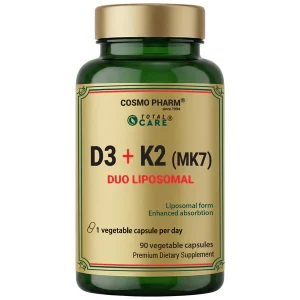
Liposomal Vitamin D3 + K2
Cosmo Pharm Liposomal Vitamin D3 + K2 combines nutrients involved in normal bone maintenance. Check the current bottle for the exact amounts and whether it suits your existing intake. Vitamin K can interact with warfarin, and adding K2 is not a reason to take excessive vitamin D. Discuss the combination if you use anticoagulants.
Explore the product Already have it? Open your Companion →Sources & further reading
- NIH Office of Dietary Supplements: Vitamin D (opens in a new tab)
- NIH Office of Dietary Supplements: Vitamin K (opens in a new tab)
- NIAMS: Exercise for bone health (opens in a new tab)
Written by Cosmo Pharm Editorial for general wellbeing education. This article does not diagnose a condition or replace individual medical advice. The organisations linked above do not endorse this product.